Founder, Susstains Engineering Solutions LLP
Building commercial-scale green energy plants rooted in breakthrough doctoral research from IIT Madras. Transforming agro-waste into biochar, activated carbon, and hydrogen — at scale, sustainably, and profitably.
Building India's green energy future from the ground up
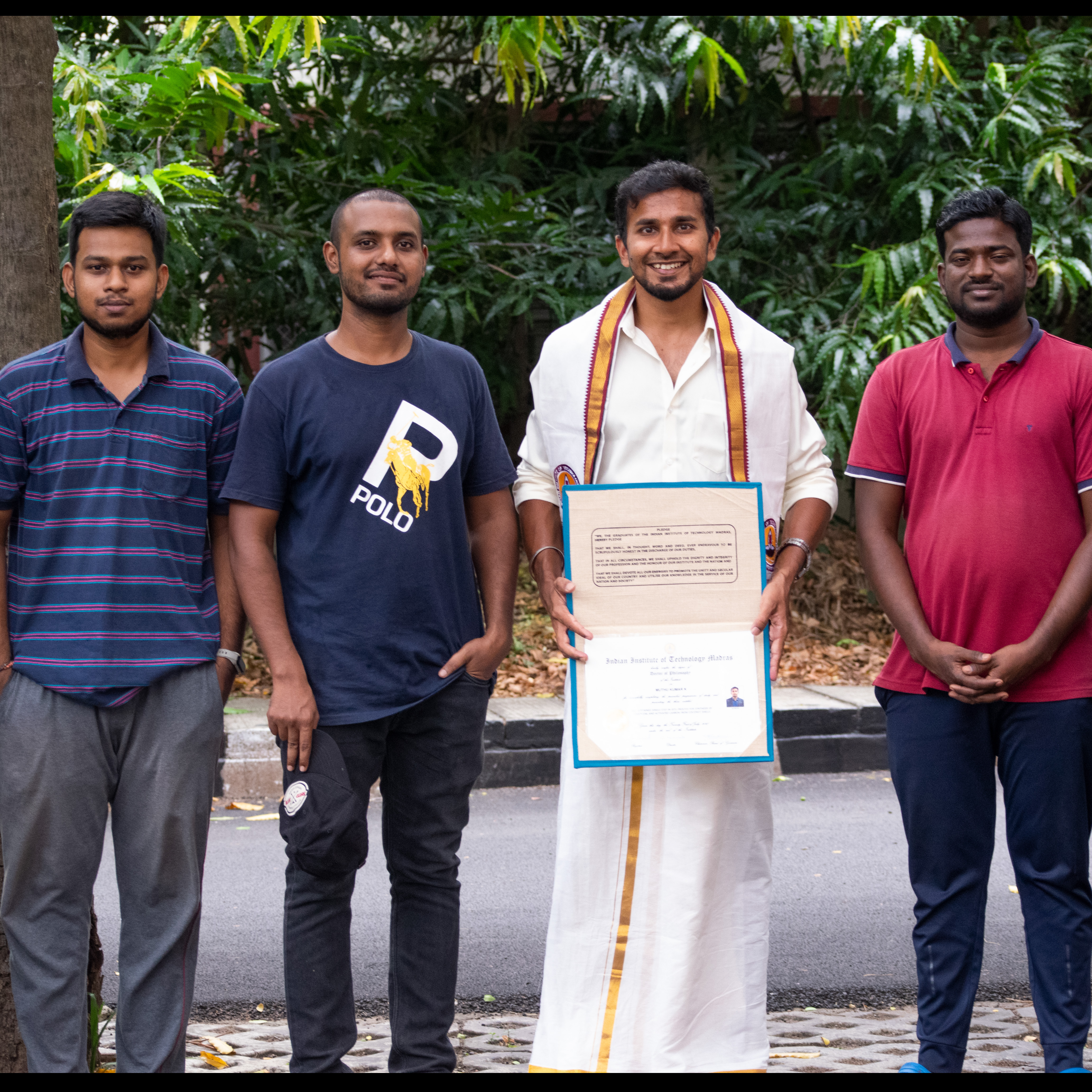
I am a clean energy industrialist who has taken PhD-level research from IIT Madras all the way to a running commercial plant. As a Prime Minister's Research Fellow, I developed fossil-fuel-free processes to convert agro-waste into biochar, activated carbon, and hydrogen-rich syngas — and then built a company around it.
Susstains Engineering Solutions LLP is a production-first business. We own our plants, produce green outputs, and sell directly to industries. Our first commercial biochar plant is operational. Our activated carbon — validated by independent researchers for hexavalent chromium removal (published, Elsevier 2025) and supercapacitor applications — is next in line for commercial scale. We also extend our technical expertise through EPC services to leading research institutions such as IITs and NITs.
I am also a competitive sprinter, having led the Athletics team at IIT Madras during 2019–2020, and clocked a personal best of 10.68 seconds in the 100 metres.

Own plants. Own production. Direct supply to industries.
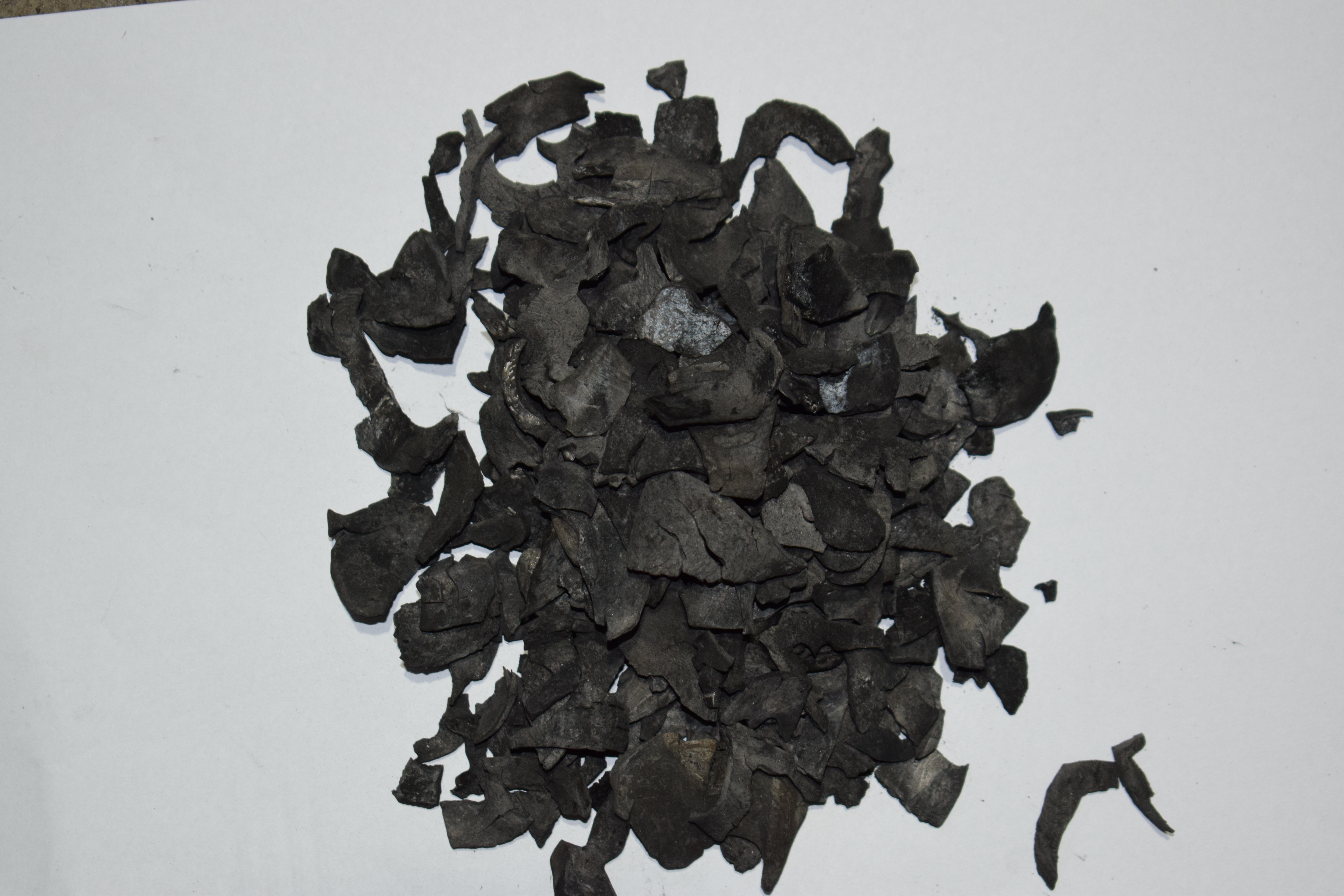
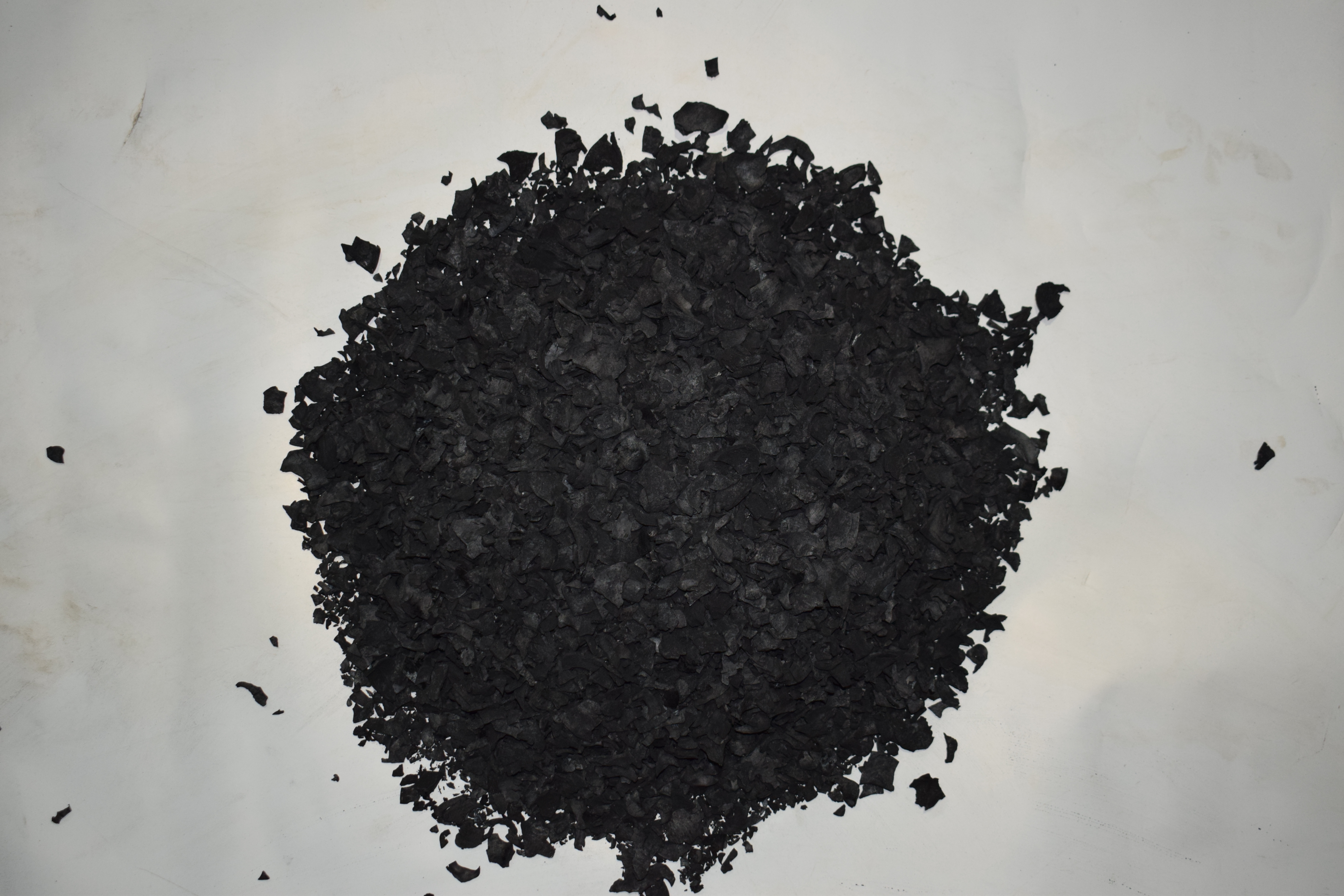
Susstains converts agro-waste — primarily coconut shells and Prosopis juliflora — into two distinct high-value carbon products through our patented and proprietary fossil-fuel-free processes. Biochar is our first commercial product, with offtake already secured. Activated carbon is our next commercial milestone.
Published research that became the technology backbone of Susstains
Developing a self-sustainable single-step process for synthesizing market-quality activated carbon and biochar from coconut shells and other ligno-cellulosic biomass, without the use of fossil fuels.

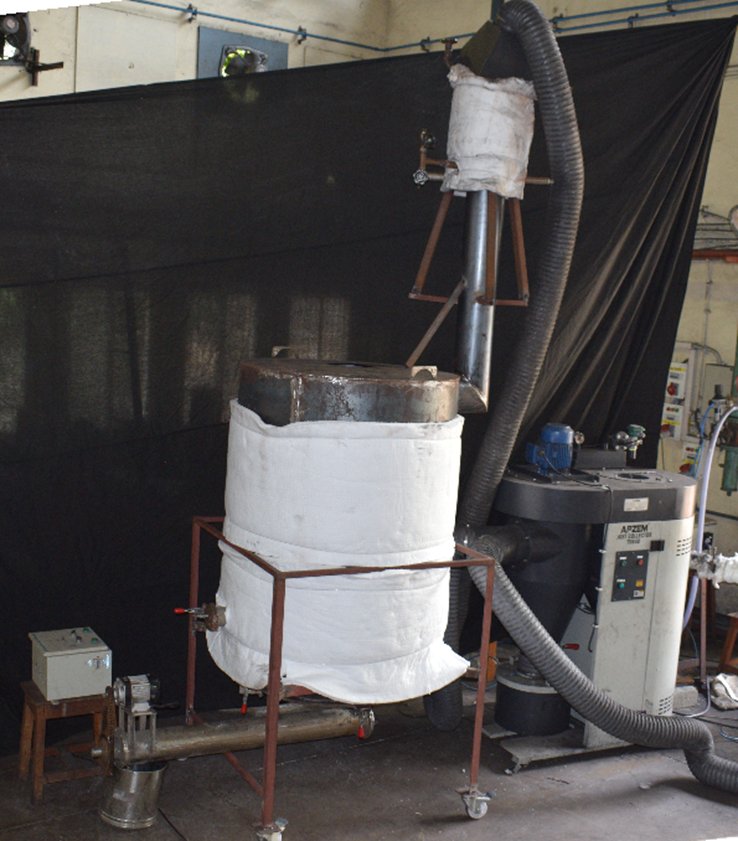
This paper presents a scalable ultra-rich carbonization process in counter-current packed bed (CCPB) for synthesizing biochar/charcoal with a yield of more than 33% and fuel consumption rate of more than 200 g/m²s (which is at least 2 times more than the maximum achievable with conventional gasification) from coconut shells (CS). The novelty of the process lies in the use of reactant pre-heating to slightly below the devolatilization temperature of CS as a strategy to achieve steady and controlled conversion of CS to biochar/charcoal. The basis for this idea is that the ignition time (tig) of biomass particles decreases significantly with pre-heating while the time for devolatilization (tv) remains more or less the same. Single particle experiments with CS as fuel and atmospheric air as oxidizer show that tv/tig increases from 1.3 to 7.7 with a corresponding increase in pre-heating temperature Ti from 30 to 170°C. The bed operation, in terms of flame propagation, equivalence ratio, and charcoal yield, with pre-heating to slightly below devolatilization temperature in CCPB systems, shows several interesting behaviors not observed in traditional gasifier systems. Two prominent examples of such behaviors are steady flame propagation under extremely rich conditions (volatile equivalence ratio, φv > 10) and reduction in peak bed temperature (Tpb) well below 600°C. The biochar yield of the developed process is at least 25% more than traditional CCPB gasification system. The feedstock flexibility, self-sustainability, and scalability of the developed process are also brought out.

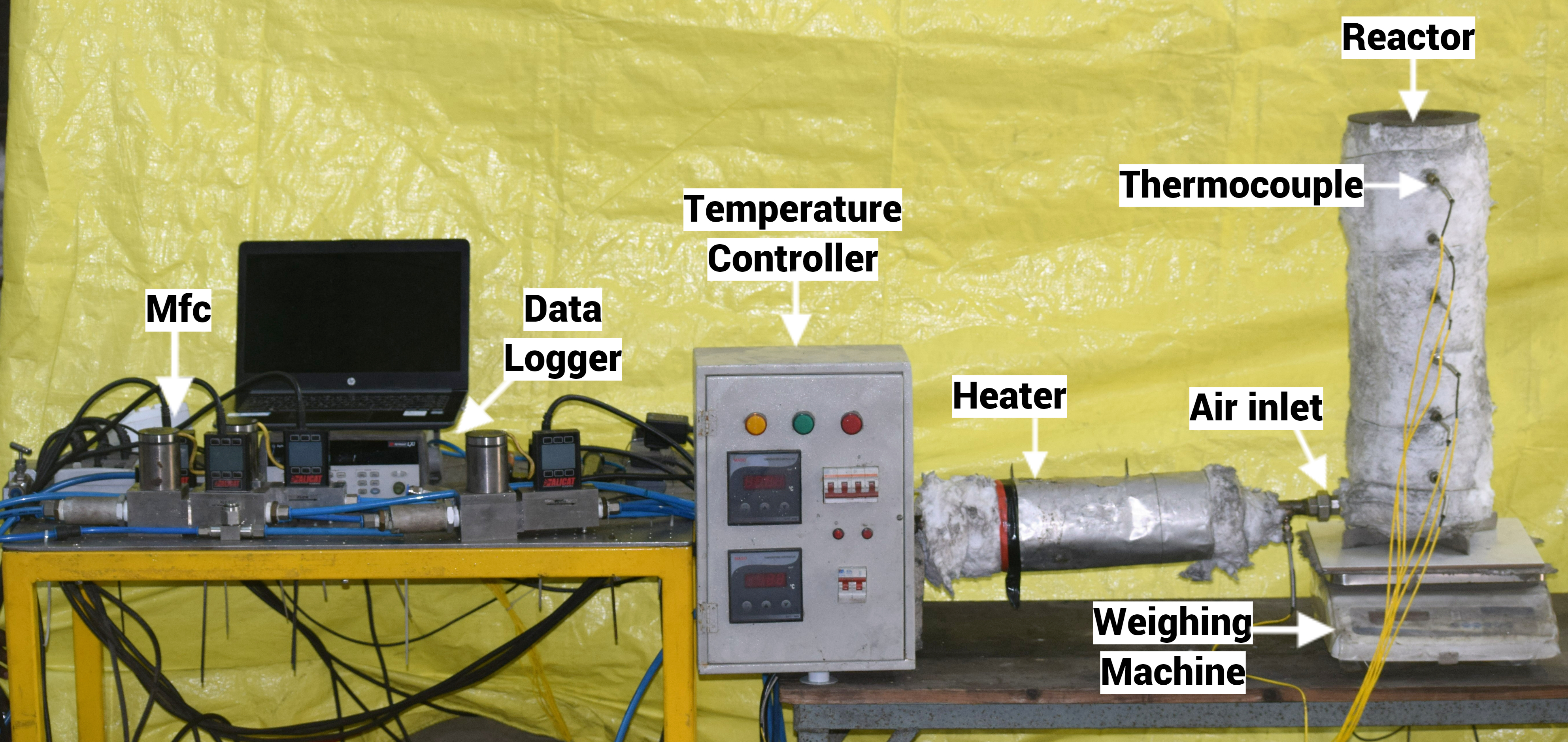
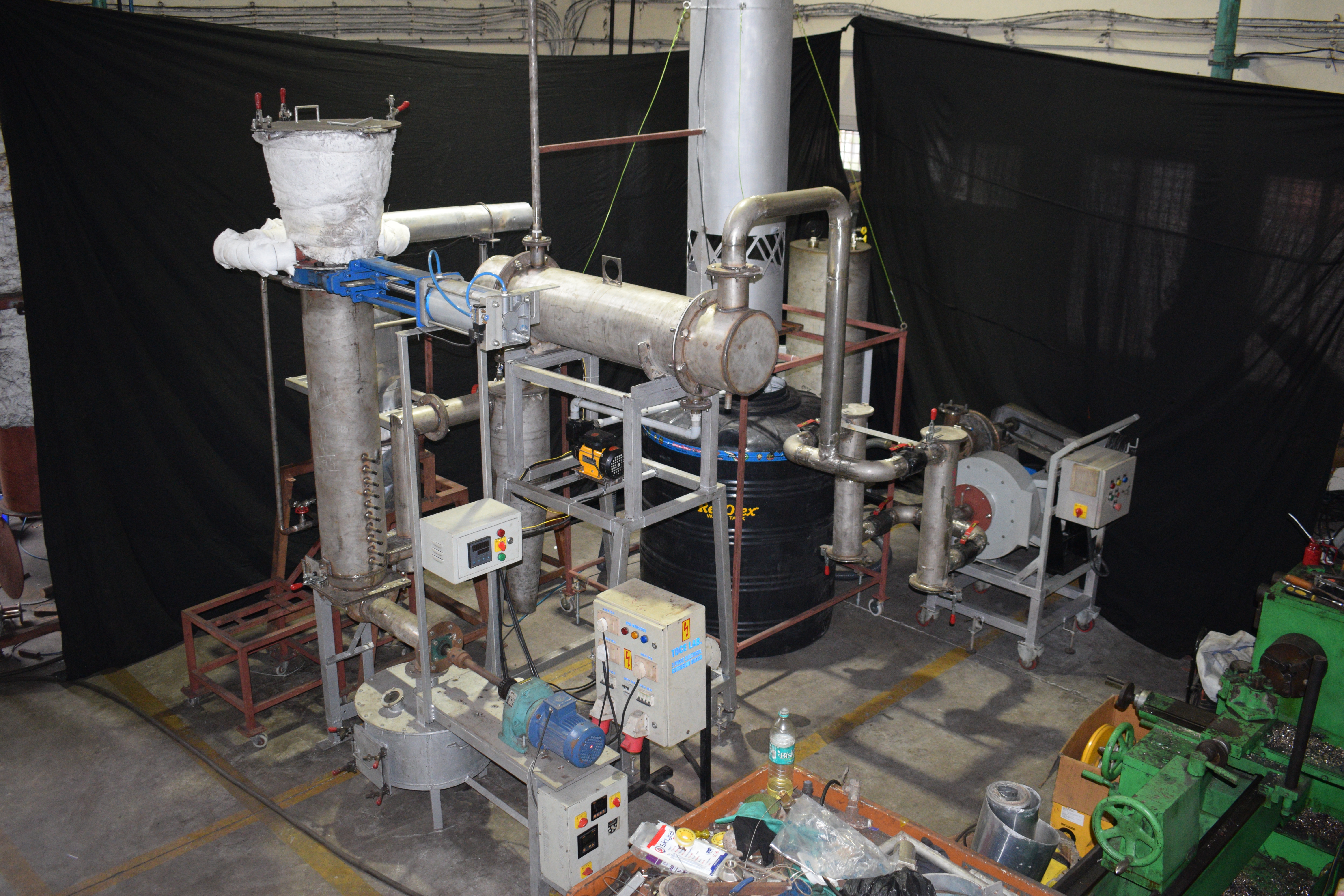
Biomass-based activated carbon is used in filtration and purification due to its high porosity and absorptivity. This paper reports a scalable single-step self-sustained process to synthesize activated carbon from coconut shells. The process uses mixtures of air and steam as the activation agent (referred to as the activator) in a counter-current packed bed system. The ratio of air to steam in the activator and the strain rate of the activator (a parameter derived from the activator flow velocity) are the key controlling parameters of activation. For a fixed ratio of air to steam in the activator, the extent of activation (quantified by the iodine value of the product) is found to initially increase with an increase in strain rate and starts to decrease beyond a certain critical value. For a given air-steam ratio, this critical value called as extinction strain rate is found to be linked to a fundamental characteristic of the gas-phase flame formed around fuel particles due to the release of volatiles. It is observed that activation increases with an increase in strain rate as long as the gas-phase flame engulfs the fuel particle. Beyond the extinction strain rate (found to be around 250 ± 10 s-1), the engulfing flame is extinguished and activation starts to fall; this is inferred to be due to the surface oxidation of char due to the absence of gas-phase flame, leading to a lack of pore formation and hence a decrease in activation. For activator flow rates within the extinction strain rate, various regimes for AC synthesis are identified based on the degree of activation and yield. Maximum activation of 850 mg/g iodine value at 8% yield is obtained at an air to steam ratio of 2 and an activator strain rate of 244 s-1.

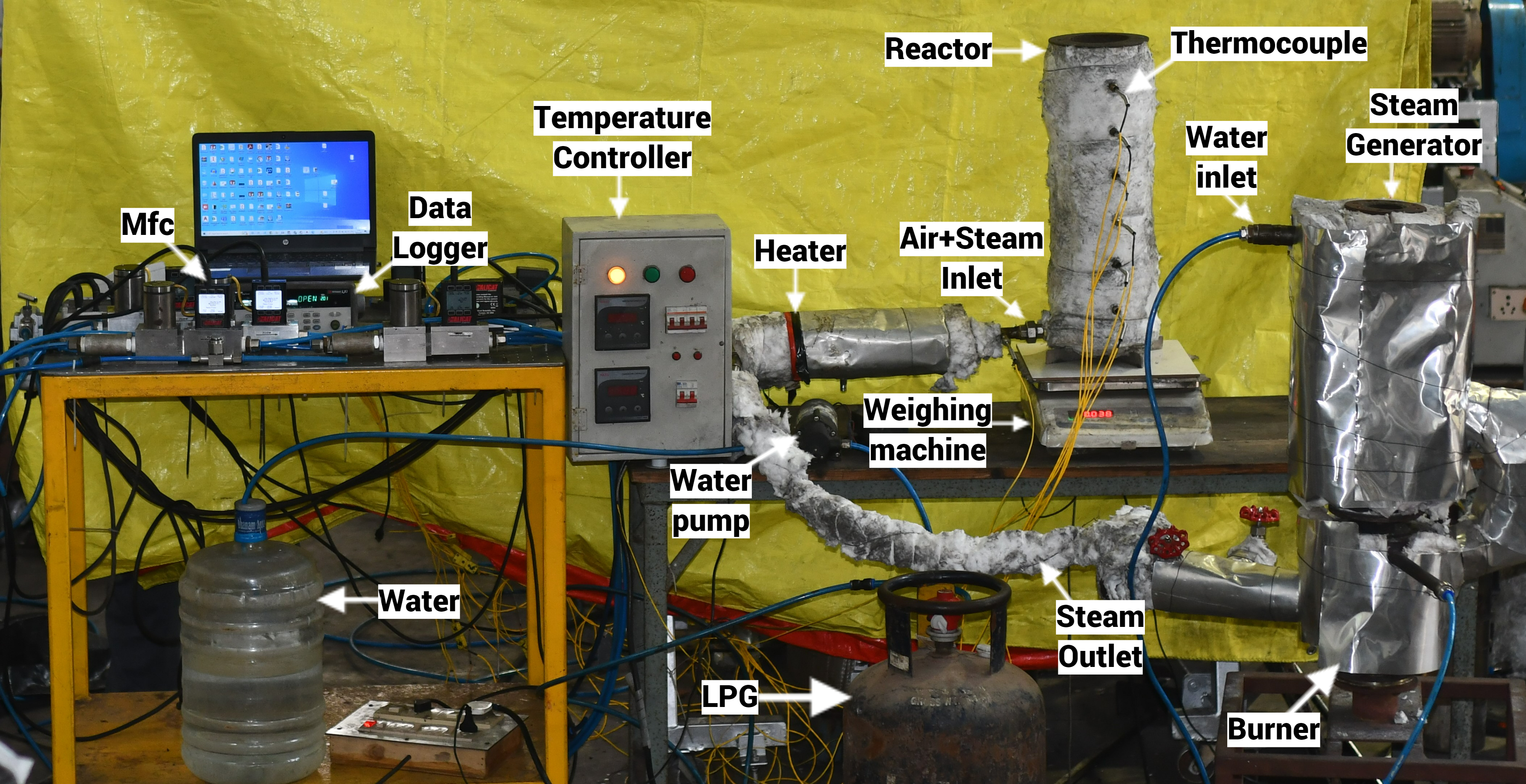
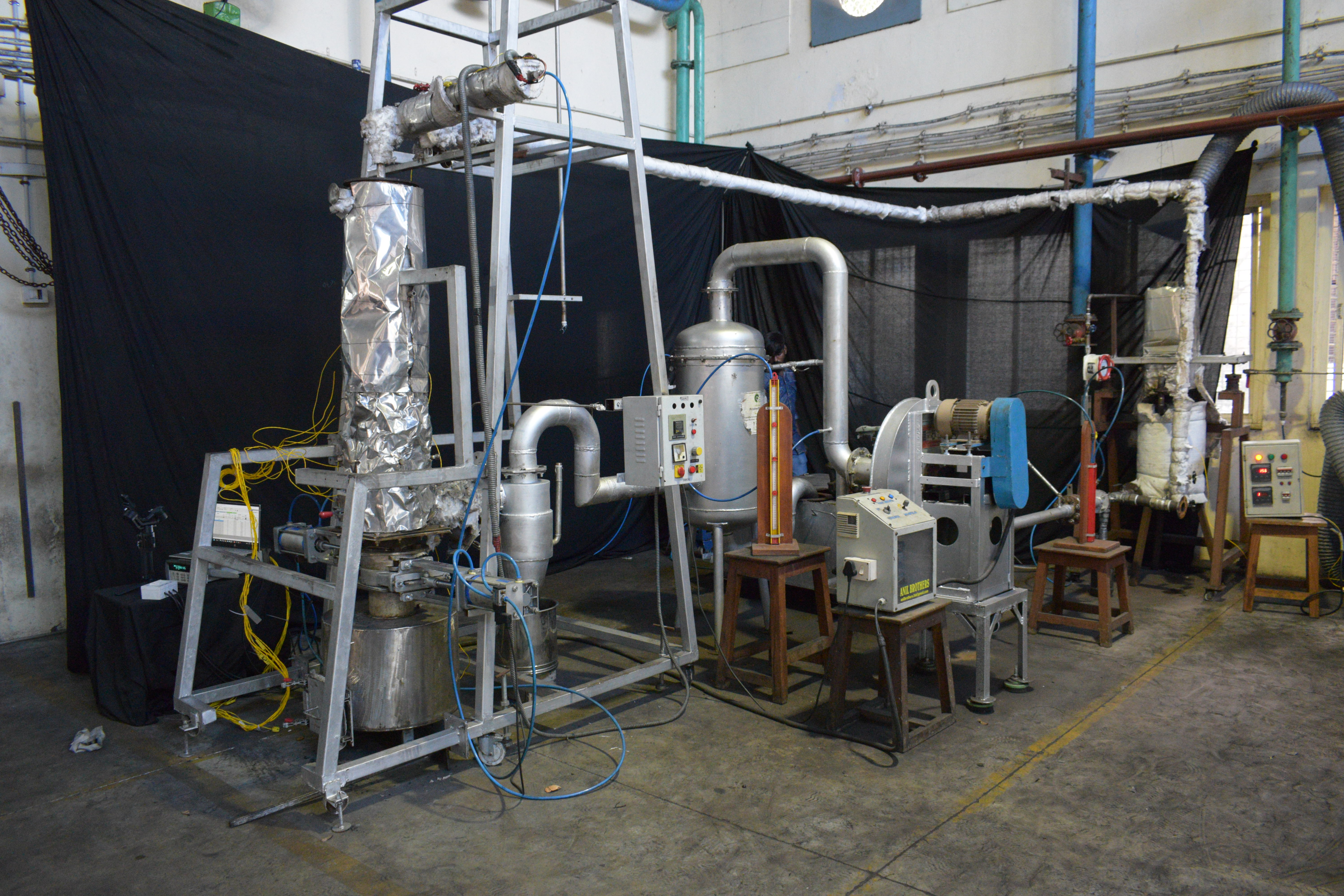
A bottom lit open top packed bed In-situ Gasification-Activation System with Staged Oxidizer Supply (IGAS-SOS) for co-generation of activated carbon (AC) and intrinsic hydrogen rich producer gas from coconut shells in single step is demonstrated. Primary air is used for gasification. Superheated steam, in conjunction with secondary air, is employed for activation by injecting it directly into the char bed and distributing it evenly. It is identified that volatile equivalence ratio between 2.1 and 2.5, steam temperature Tsteam of ~700°C, and tact of ~3 h are critical for char-steam reaction to be kinetically controlled. Increase in Tsteam from 250°C to 700°C increases both maximum activation and intrinsic H2 yield from 624 m²/g and 16 g/kg of biomass to 965 m²/g and 27 g/kg of biomass, respectively without much compromise in AC yield. Further, preferred configuration of oxidizer supply also ensures tar free exit gas, with higher hydrocarbon levels below 2.5 g/kg of biomass. SABET and yield are enhanced at least twofold compared to earlier works on in-situ physical activation.
From lab breakthrough to commercial-scale green energy plants

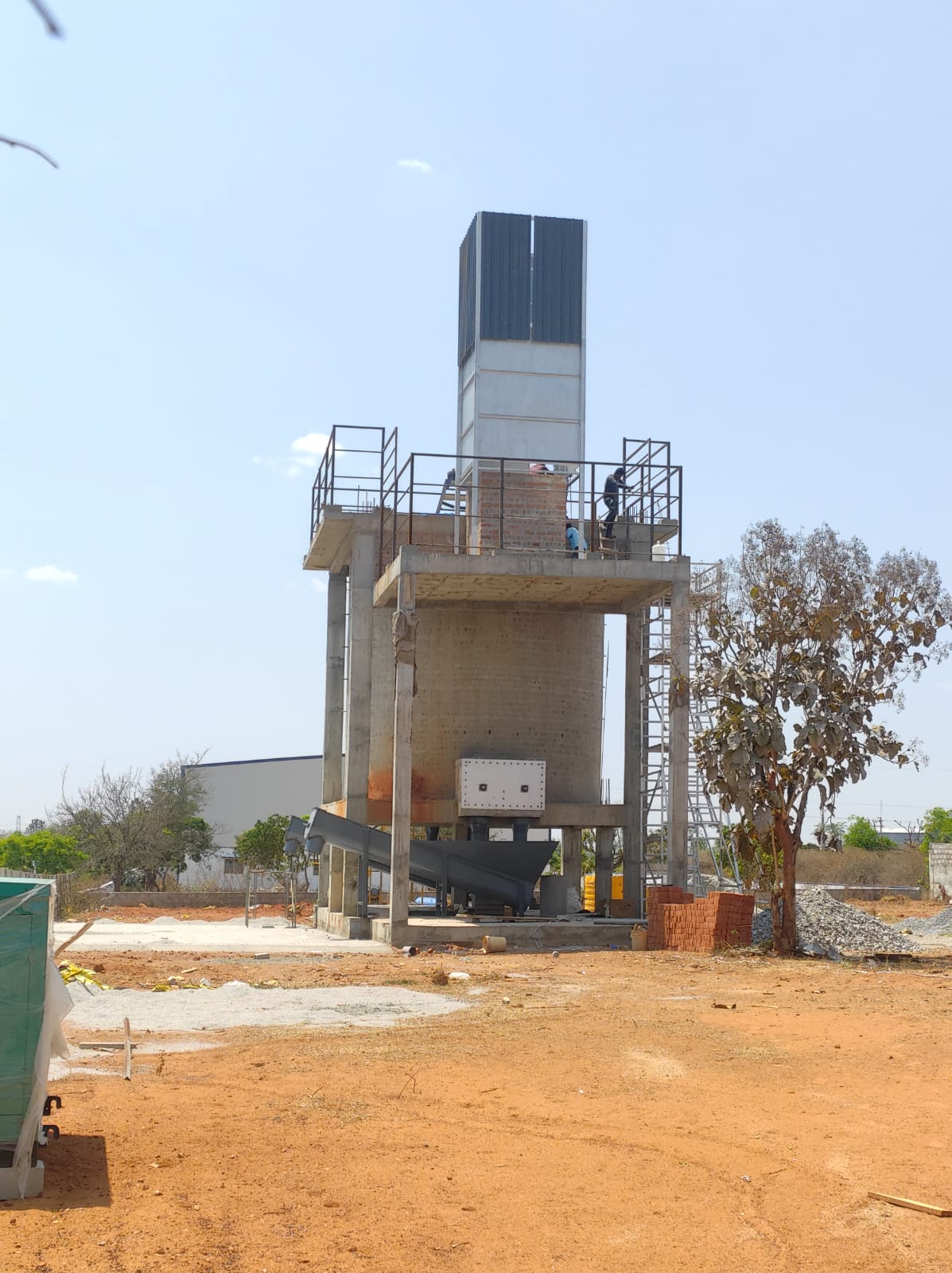
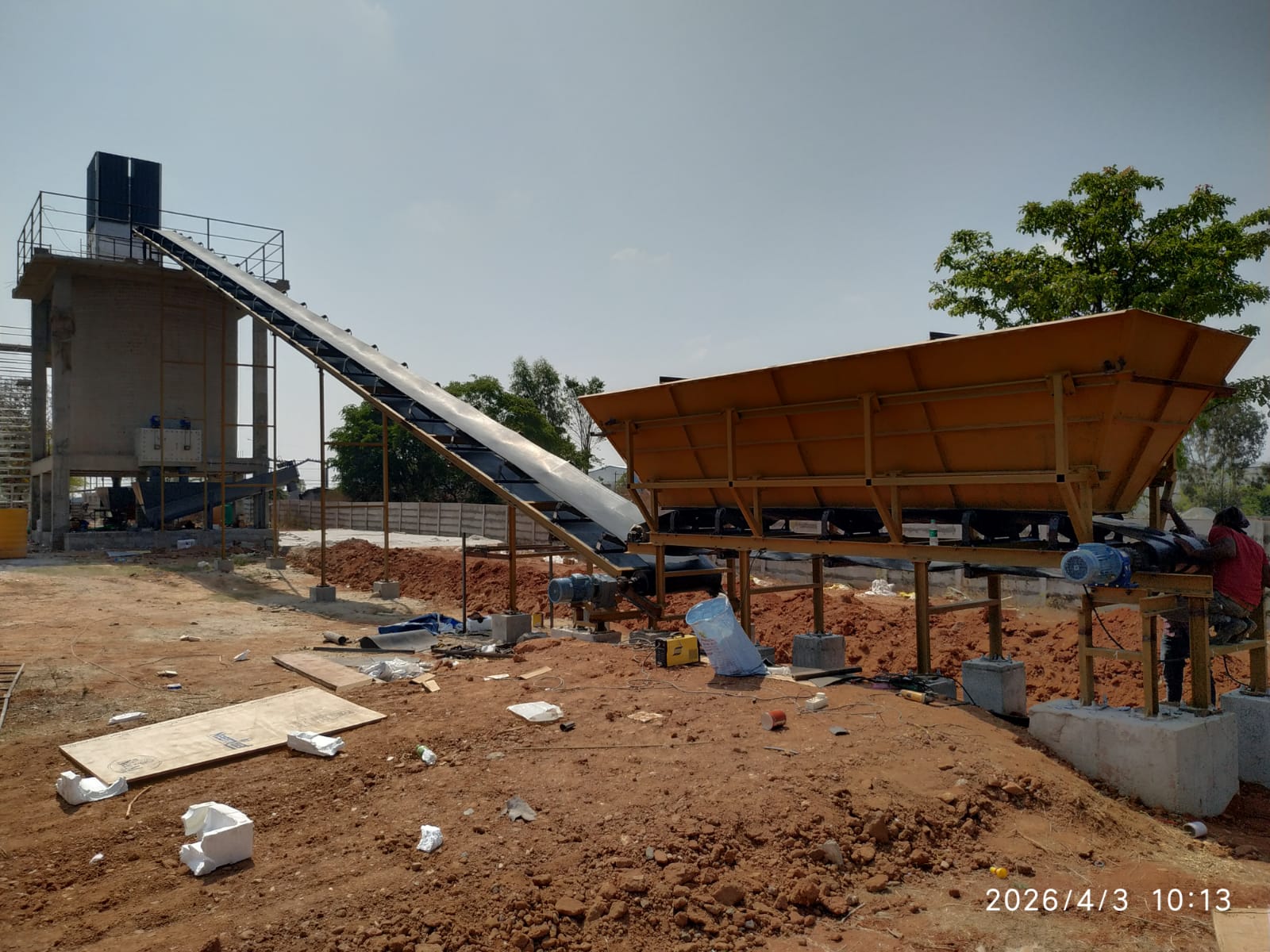
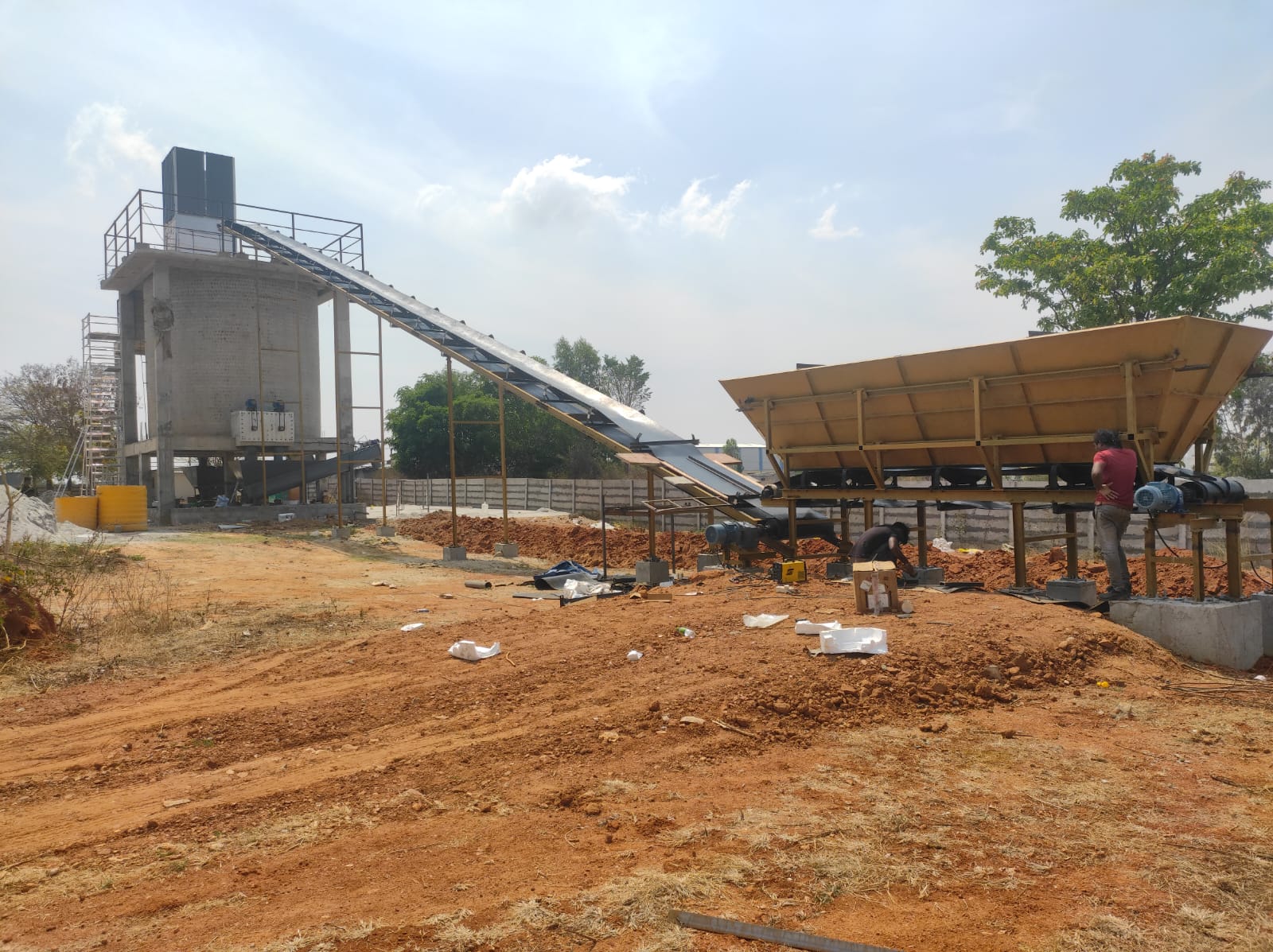
Our proprietary buoyancy-driven co-current carbonization process — developed through a decade of R&D at IIT Madras — produces high-yield biochar from coconut shells and Prosopis juliflora. Fully NGT-compliant with all regulatory clearances obtained. Commercial plant operational at 18 TPD in Tumkur, Karnataka.

Patented single-step, self-sustained in-situ activation process (Patent No. 389137). No rotary kiln, no external fuel, no tar generation. Steam generated in-situ. Currently at 1 TPD pilot scale with commercial scale as the next milestone.
Biomass-based hydrogen-rich syngas co-generation system. A simple, self-sustained fixed bed gasifier producing tar-free hydrogen-rich producer gas from biomass — a future platform for green hydrogen and power generation.
18 TPD commissioned plant. Dry run trials complete. Normal operations commencing. Offtake clients secured. Built on our proprietary buoyancy-driven co-current carbonization process — fully NGT-compliant.


Winner — Green Charcoal Hackathon organized by NTPC.
View Hackathon ↗Winner — Carbon Zero Challenge 2019. Emerged victorious from 996 teams.
View Award ↗Selected for funding & incubation by Nirmaan — pre-incubation cell of IIT Madras.
Voted “Socially Relevant Project” by IIT Madras Alumni Association (IITMAA), March 2019.
Funding from Startup India Seed Fund Scheme (SISFS) through incubator SSNiFound.
Funding from MeitY TIDE 2.0 scheme through the Forge Accelerator.
Funding from Shell GameChanger Programme for biochar plant development.
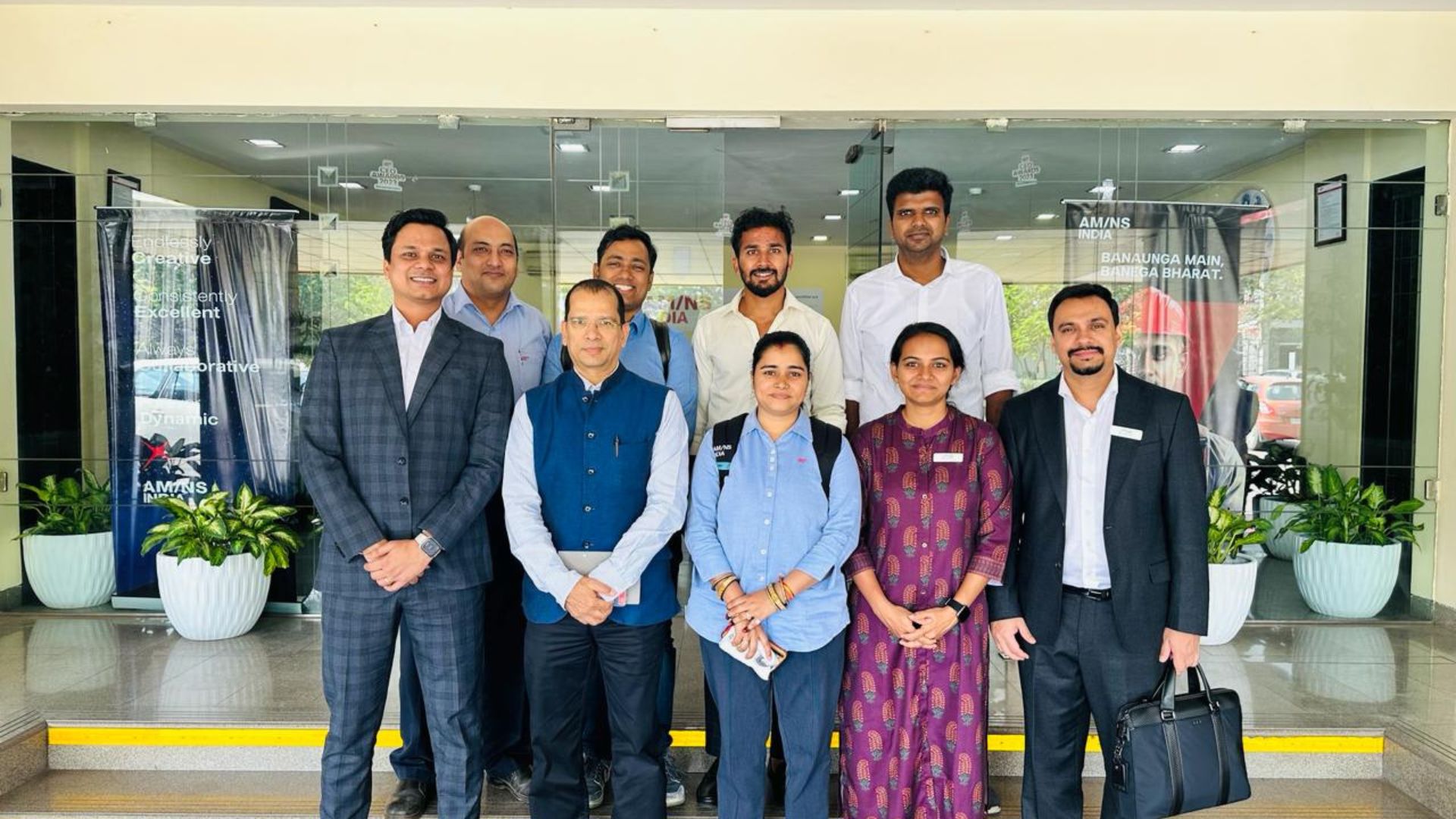
Shell GameChanger ↗One of three winners of the XCarb India Accelerator Programme by ArcelorMittal Nippon Steel India — decarbonization solutions for the steel industry.
XCarb India Accelerator ↗
Competitive sprinter and former Captain of the Athletics team at IIT Madras (2019–2020). Sport and science share the same DNA — precision, persistence, and the drive to push past limits.

For investment, commercial supply enquiries, or EPC consulting
Whether you're an investor exploring clean energy opportunities, an industry buyer seeking biochar or activated carbon, or a research institution looking for EPC expertise — reach out.
Commercial biochar plant operational in Tumkur. Offtake secured. Activated carbon commercial scale next. Accepting supply enquiries and investment discussions.
Visit susstains.com ↗